I have encountered many stories surrounding the Joseph Smith death mask—some eerily similar to my father’s story. Many claims about having the most accurate representation of Joseph Smith are, in fact, incorrect. Allow me to explain why.
During the 1950s and 1960s, my father worked among the top Church leaders. His office was adjacent to Edward O. Anderson’s, the Church Architect, in the old Church Office Building. For a period of about three years, my father had access to the original Joseph Smith death mask, which was loaned to Ed O. Anderson by a Church member who had acquired it from the Catholic Church. During that time, the death mask resided in Ed Anderson’s office, making my father the first artist to use it for artistic purposes.
Unlike many artists who focus solely on skeletal and muscular structure, my father emphasized the fat and sinew that define the subtle contours and expressions of the human face. His observations were informed by unique opportunities, such as watching Ed Anderson rest on a sofa. With Anderson’s facial features resembling those of Joseph Smith, my father could study how relaxation affected the drooping and flattening of muscles and fat in the cheeks, providing critical insights
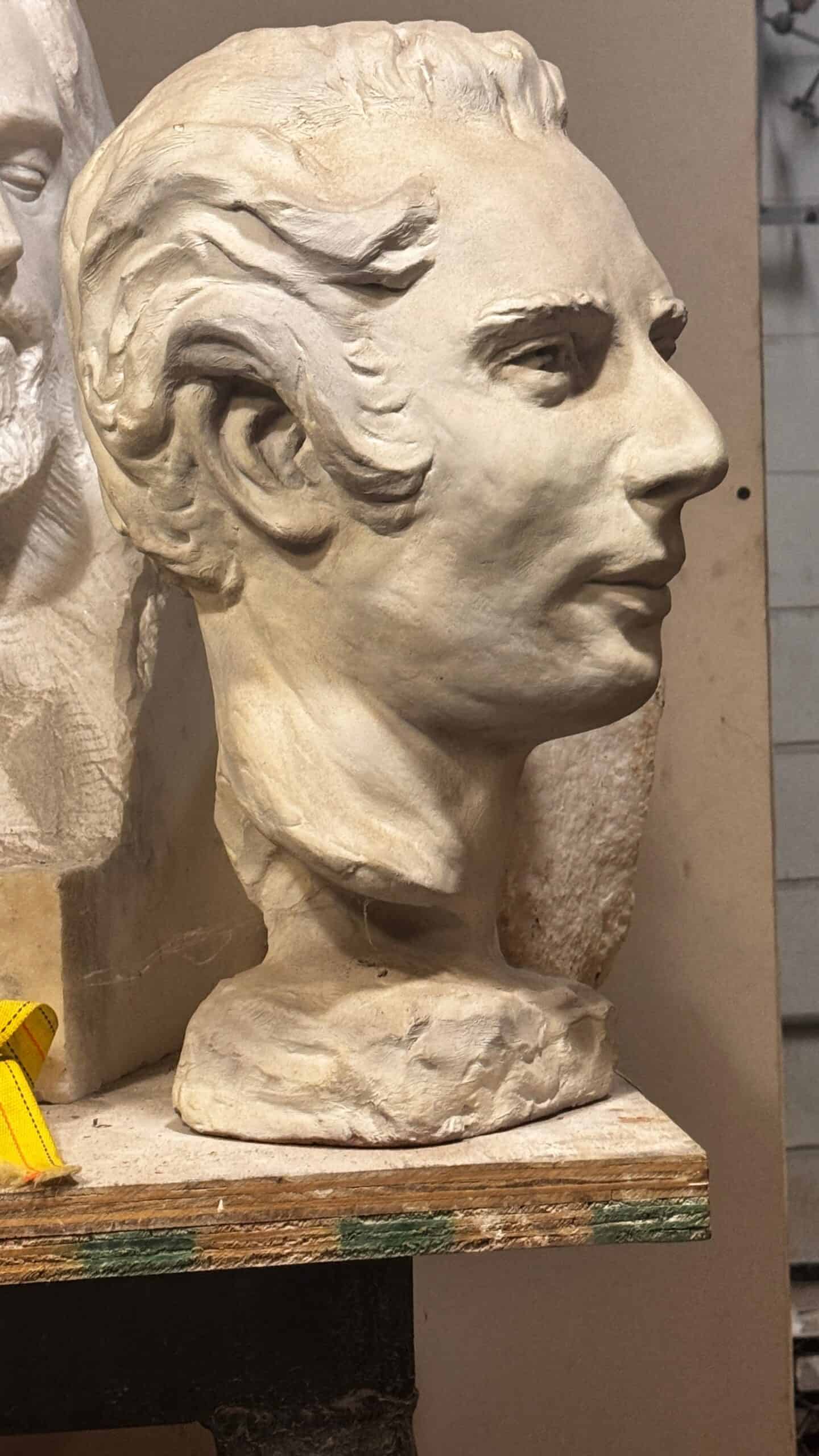
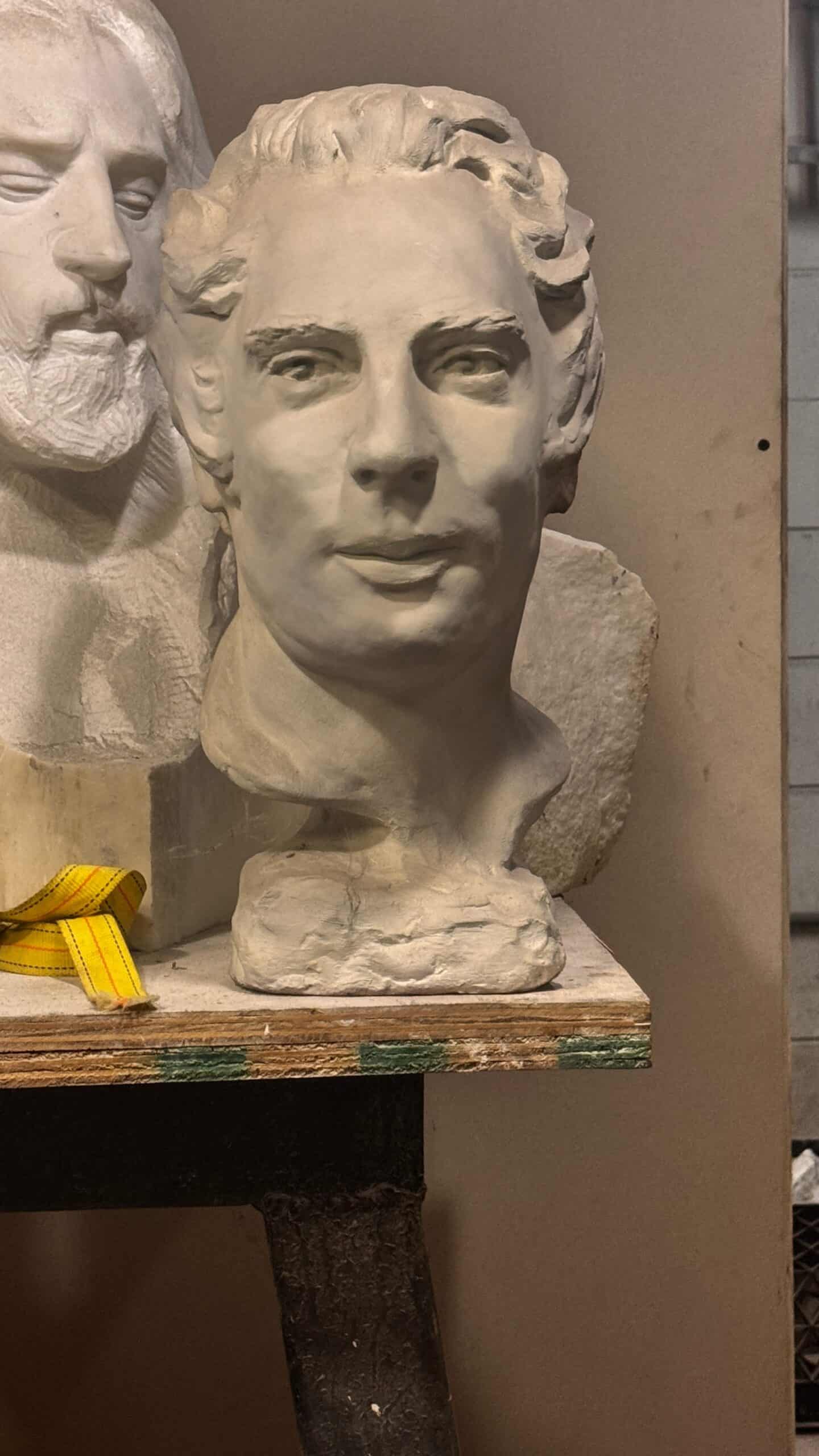
Misconceptions and Artistic Challenges
1. Overlooked Features and Artistic Conjecture
Many early representations of Joseph Smith misinterpret or simplify key features of his anatomy. Artists frequently used "foils"—techniques to obscure what they did not understand, such as high collars or minimized jawlines. For example, Joseph Smith had a pronounced jaw and a severe overbite akin to Freddie Mercury's. Early artists either ignored or deliberately downplayed these characteristics, which contributed to his distinctive appearance and likely his resonant voice.
2. The Role of Hyrum Smith
Hyrum Smith, Joseph’s brother, died the same day and can serve as a reference point for cross-comparison. Hyrum’s anatomy provides valuable clues about shared family traits, such as their prominent upper mandibles and masculine facial structures.
3. The Keystone of the Face
In portraiture, the “keystone” refers to the area between the eyebrows and the upper nose. This region defines much of a person’s likeness and character. My father carefully studied the death mask to capture Joseph Smith’s prominent brow line, which other artists often smoothed out, making their portrayals appear lifeless and overly idealized—akin to Botoxed faces.
4. Understanding the Overbite
Joseph’s overbite was a defining feature, visible even in the death mask profiles. Unlike Hyrum, who lacked this trait, Joseph’s pronounced overbite and large nose likely contributed to his magnetic presence and voice resonance. Early artists struggled with these features, sometimes eliminating them entirely from their work.
5. Effects of Death on Facial Features
Upon death, the face naturally droops, and the jaw slackens. In the case of death masks, fabric or string was often used to stabilize the jaw temporarily for the plaster mold. My father understood these post-mortem distortions and corrected them in his art, avoiding the “slackened” appearance commonly seen in other depictions.
6. Nasolabial Folds and Cheeks
Joseph Smith’s death mask shows pronounced nasolabial folds and robust cheeks, which other artists often smoothed out or neglected entirely. My father emphasized these features, understanding their importance in creating a strong and lifelike portrayal.
7. Missing Ramus and Masculine Features
The death mask omits the ramus (the vertical back part of the jaw), leading many artists to guess at the jaw’s structure. My father’s interpretation, informed by Joseph’s prominent brow and overall masculine features, included a strong ramus to balance the face’s proportions.
Lessons from My Father’s Art
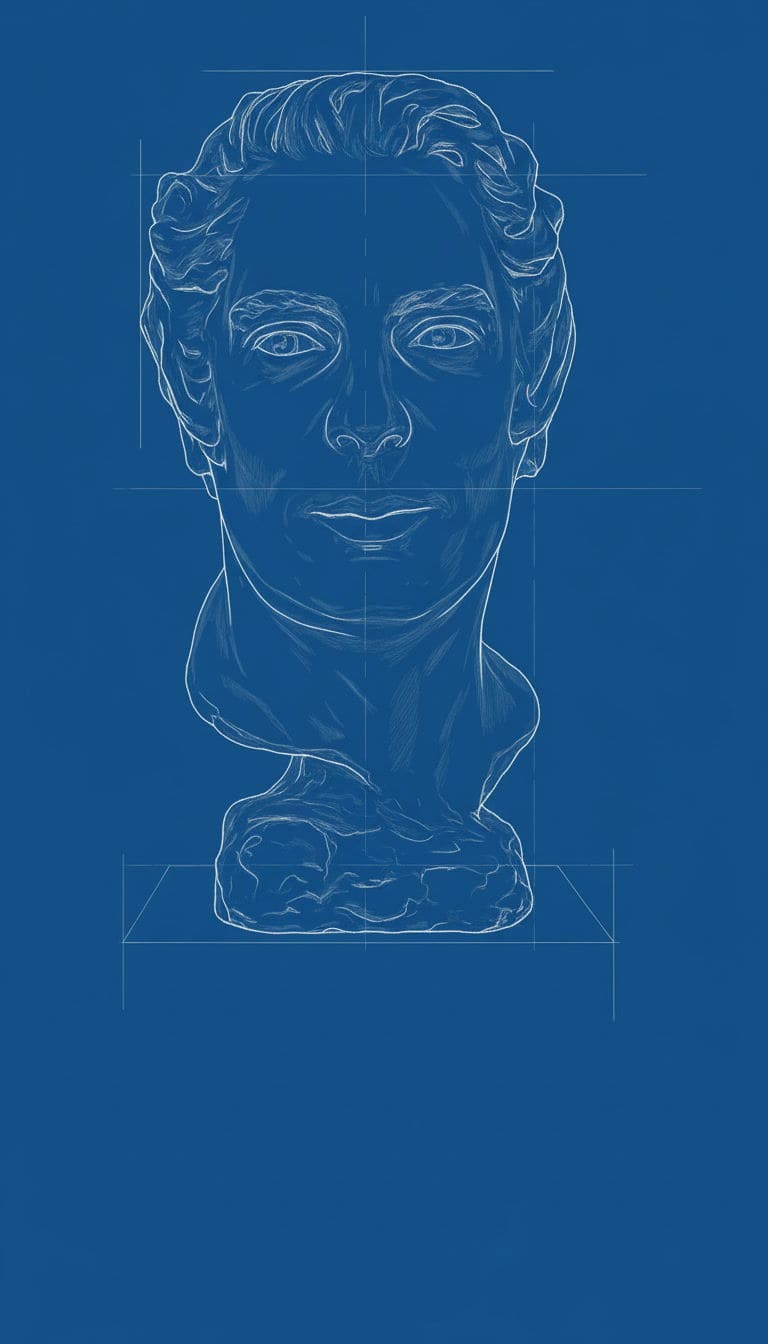
One of the earliest art lessons my father, Paul Forster, taught me was the importance of avoiding parallel lines in facial features. When a face withers and shrinks, its lines become parallel, leading to lifeless depictions. Life is added by introducing movement and curvature. Observations of other artists’ work on Joseph Smith reveal a failure to move beyond the death mask’s static lines, resulting in lifeless, Botox-like depictions. Even modern computer models fail to capture his vitality.



Conclusion
Art relies on the artist’s judgment and interpretation, but it should also respect the truth of its subject. My father’s access to the original death mask, combined with his meticulous study of anatomy, ensured a more accurate and lifelike representation of Joseph Smith. In contrast, many other depictions rely on conjecture and fail to capture the essence of his character and physical presence.
A brief synopsis of my Father’s contributions.
This bust was created by my father in the late 1950s to early 1960s. Before becoming a professor at BYU, my father worked closely with the Church Architect, Edward O. Anderson, in his office located in the old Church Office Building. He also collaborated with Wendal B. Mendenhall and was friends with Elder Simpson. Tom O. McKay became a regular visitor in our home, and my father developed a close friendship and advisory relationship with J. Willard Marriott.
Edward O. Anderson served as the General Church Architect during the 1940s and focused on temple design in the 1950s. My father was selected as the principal muralist for several of Anderson’s temple projects, including the construction of the Swiss Temple, the Los Angeles California Temple, the London England Temple, and the Hamilton New Zealand Temple. Additionally, he contributed to the remodeling of the Salt Lake Temple, the Manti Utah Temple, and the St. George Utah Temple.
Beyond his temple work, my father played a key role in designing the Polynesian Cultural Center in Laie, Hawaii. He helped form a bridge between the Islands and BYU–Hawaii, with the center serving as both an educational attraction for the public and an employment opportunity for young Pacific Island adults. The income they earned at the center often went toward funding their education.
During this time, my father was also a professor in the Tongan Islands and worked on a project to design a giant grass hut, called a Fale (pronounced Fãllēē). His colleagues humorously dubbed it “Forster’s Folly,” but after the structure withstood a massive hurricane, church leadership
